Create Stunning Traditional Indian AI Portraits: Complete Prompt Guide
Introduction
AI image generation has transformed the way creators, bloggers, designers, photographers, and social media enthusiasts create visual content. With the right prompt and a high-quality reference image, you can generate highly detailed traditional Indian portraits featuring authentic clothing, jewelry, cultural settings, cinematic lighting, and professional photography styles.
Traditional Indian fashion is especially suitable for AI image generation because of its rich colors, intricate embroidery, jewelry, flowers, architecture, and festive atmosphere.
In this guide, we will explore a detailed AI image prompt for creating an elegant traditional Indian portrait and explain how to customize it for different occasions, outfits, backgrounds, and photography styles.
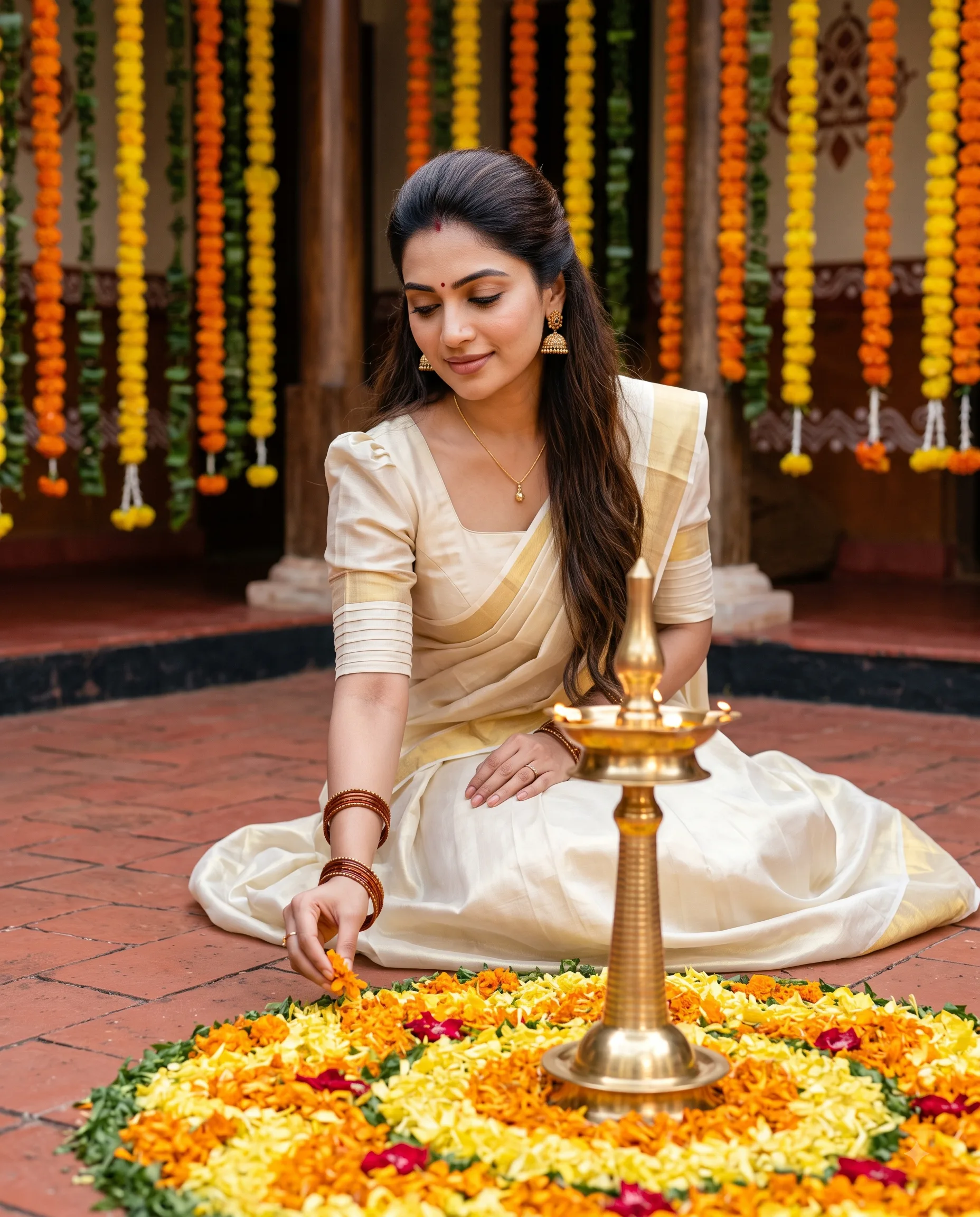
Prompt
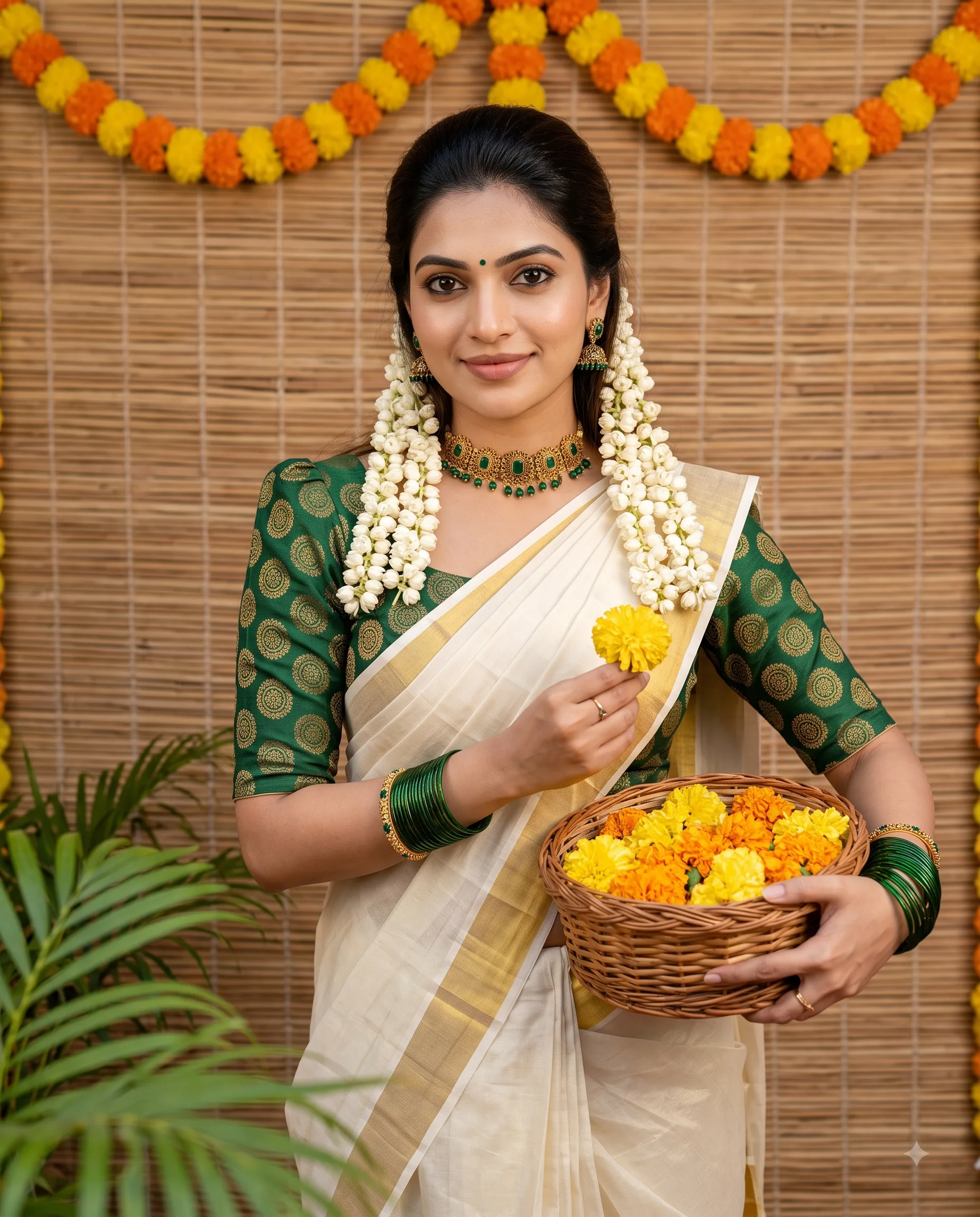
Prompt
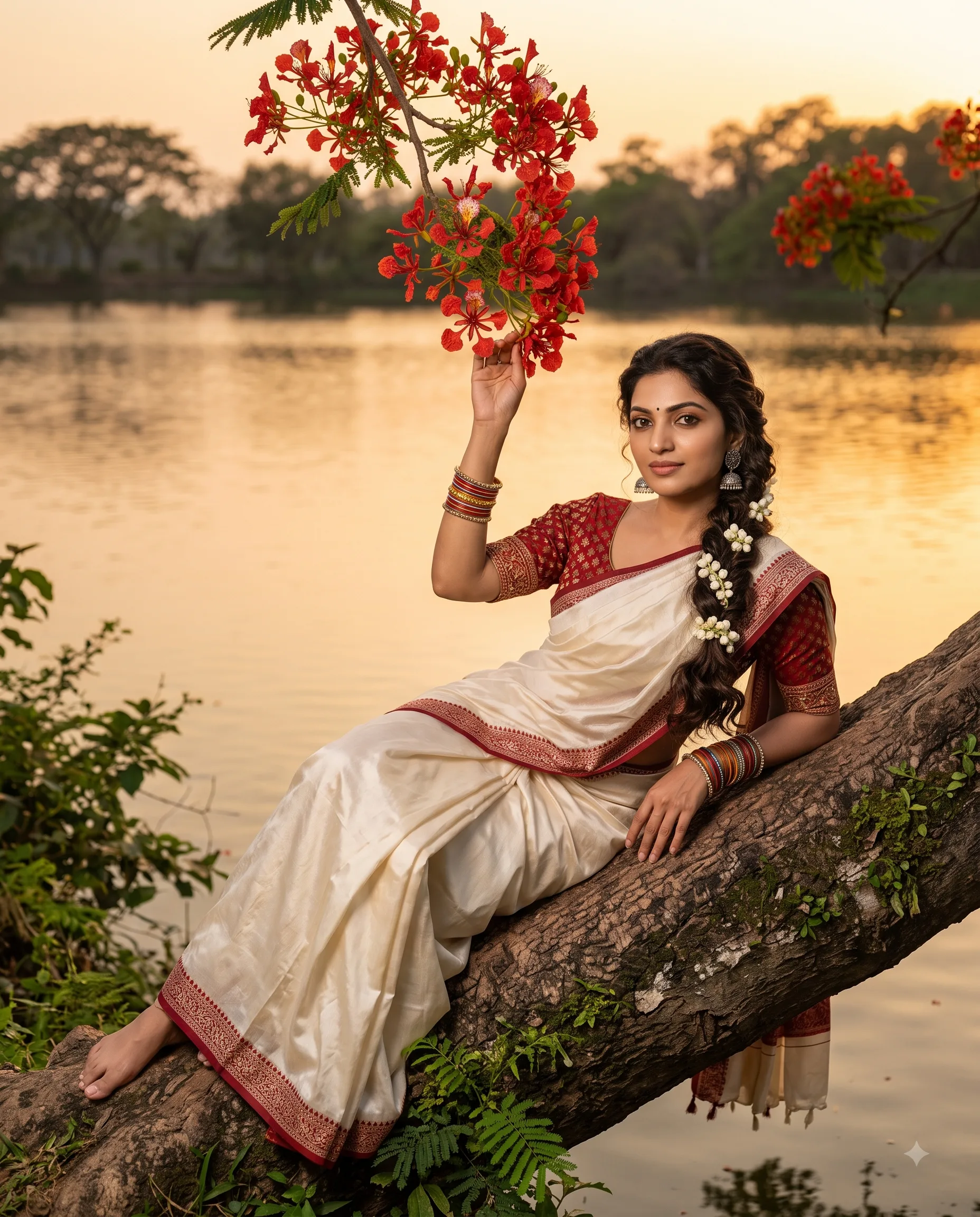
Prompt
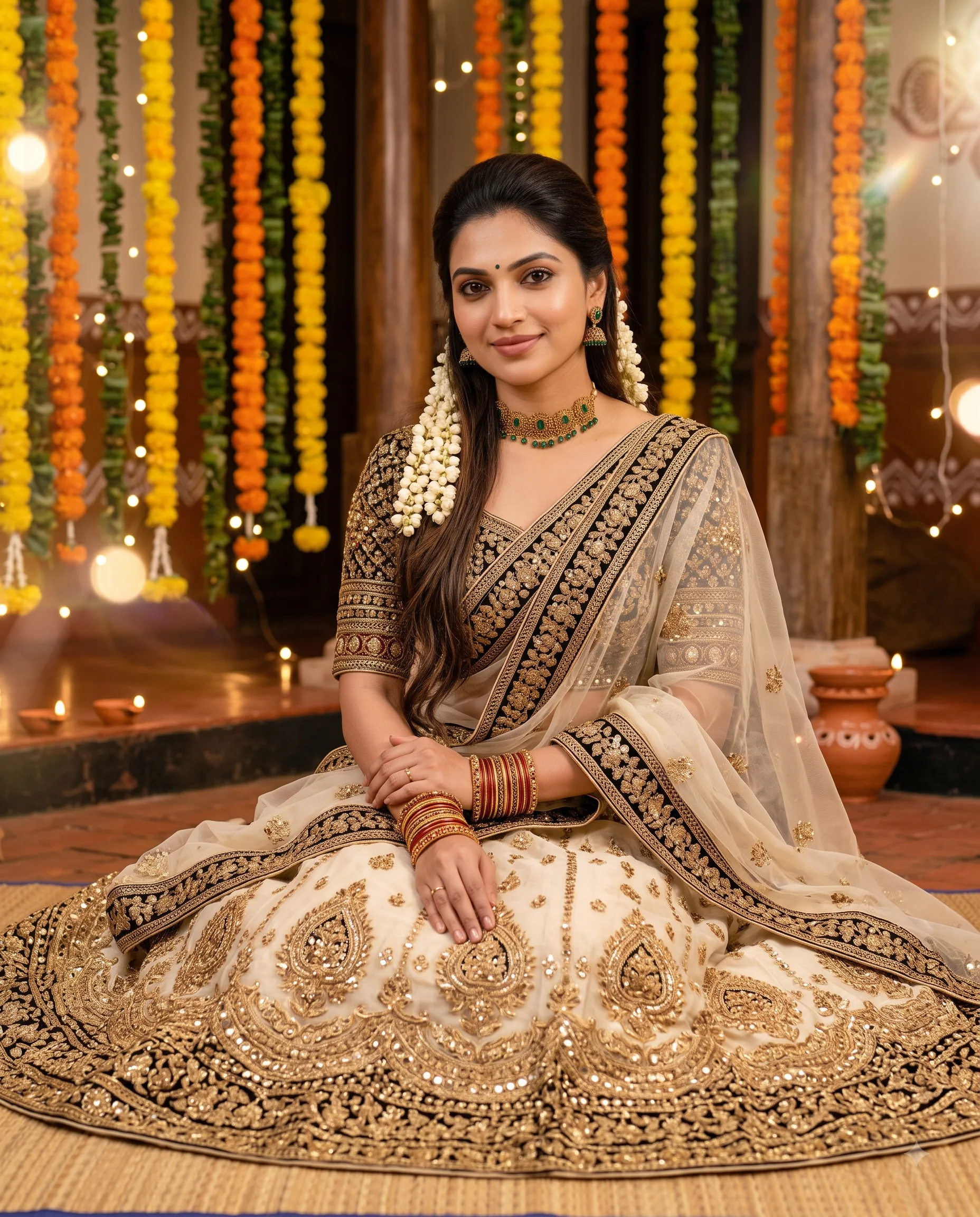
Prompt
🚀 How to Use This Prompt
The quality of an AI-generated image depends heavily on how clearly the prompt describes the desired result.
A strong prompt should specify:
- Subject: Who should appear in the image?
- Pose: How should the person stand, sit, or interact with the environment?
- Outfit: Saree, lehenga, salwar suit, dhavani, or other traditional clothing.
- Colors: Specific colors for clothing and accessories.
- Hair and makeup: Hairstyle, flowers, bindi, eyeliner, and lip color.
- Jewelry: Earrings, necklaces, bangles, rings, and other accessories.
- Background: Festival decorations, gardens, temples, courtyards, lakes, or traditional interiors.
- Lighting: Golden hour, soft daylight, studio lighting, or cinematic illumination.
- Camera angle: Close-up, medium shot, three-quarter portrait, or full-body composition.
- Photography style: Ultra-realistic, cinematic, editorial, professional portrait, or fashion photography.
- Depth of field: Sharp subject with a softly blurred background.
Benefits of Using This Prompt
1. Professional Appearance
Detailed prompts help AI models understand the desired composition, clothing, lighting, and photographic style. Instead of generating a generic portrait, you can guide the model toward a professional editorial or cinematic result.
2. Creative Customization
The prompt can easily be customized according to your preferred:
- Saree color
- Blouse design
- Jewelry
- Hairstyle
- Flower arrangement
- Festival
- Location
- Camera angle
- Lighting style
- Mood
- Background
3. Consistent Visual Style
Using a structured prompt makes it easier to create multiple images with a similar visual identity. This is particularly useful for Pinterest boards, Instagram content, blogs, digital portfolios, and creative campaigns.
4. Cultural Storytelling
Traditional clothing, flowers, jewelry, architecture, and festive decorations can be combined to create images that visually communicate Indian cultural traditions.
Creative Customization Ideas
You can create many variations by changing only a few elements of the prompt.
Kerala Onam Theme
Use a traditional Kerala Kasavu saree, jasmine flowers, pookalam, banana leaves, brass nilavilakku, and marigold decorations.
Vishu Theme
Add a Vishukkani arrangement, traditional brass lamps, golden flowers, fruits, rice, and a warm morning atmosphere.
Bengali Theme
Use an ivory saree with a red border, red blouse, jasmine flowers, traditional Bengali jewelry, and a backdrop featuring a lake or flowering trees.
Wedding Theme
Replace the simple jewelry with elaborate bridal jewelry and introduce a decorated wedding mandap, flowers, candles, and warm golden lighting.
Royal Portrait Theme
Use an ornate lehenga, heavy gold jewelry, palace architecture, dramatic lighting, and cinematic depth of field.
Nature Portrait
Place the subject beside a lake, under a flowering tree, in a garden, or among lush tropical foliage.
Best AI Apps for This Prompt
Several AI image-generation platforms can be used to experiment with prompts like this.
Popular options include:
- ChatGPT image generation
- Midjourney
- Adobe Firefly
- Google image-generation tools
- Other modern text-to-image platforms
Different models interpret prompts differently, so the same prompt may produce different results across platforms.
For the best results, experiment with the prompt structure rather than simply copying the same description repeatedly.
Commercial Uses
AI-generated traditional fashion imagery can be useful for a variety of creative projects, including:
- Fashion blogs
- Pinterest content
- Instagram posts
- Festival campaigns
- Clothing brand concepts
- Jewelry advertisements
- Wedding inspiration boards
- Website banners
- Digital magazines
- Social media campaigns
- Creative portfolios
- Poster concepts
- Thumbnail designs
- Editorial mood boards
However, always verify the commercial-use and licensing rules of the AI platform and any reference images you use before using generated content commercially.
Common Mistakes to Avoid
1. Using Very Short Prompts
A prompt such as:
"Indian woman in saree, realistic"
does not provide enough information about the desired composition.
Instead, describe the outfit, pose, lighting, background, accessories, and photography style.
2. Adding Too Many Conflicting Instructions
A prompt containing contradictory camera angles, poses, lighting conditions, and compositions can confuse the image model.
Keep the creative direction detailed but logically consistent.
3. Ignoring Hands and Accessories
Hands, jewelry, flowers, and other small details can strongly affect the realism of a portrait. Include them explicitly when they are important to the composition.
4. Overusing "8K"
Terms such as "8K" and "ultra-HD" alone do not guarantee a realistic image.
More useful descriptions include:
- Natural skin texture
- Detailed fabric
- Realistic lighting
- Accurate proportions
- Fine hair strands
- Individual flower petals
- Professional depth of field
5. Forgetting the Background
A beautiful subject can still produce a weak image if the background is generic or inconsistent with the theme.
Describe the environment as carefully as the subject.
Pro Tips for Stunning Results
Use Layered Prompting
Build your prompt in a logical order:
Subject → Pose → Outfit → Hair → Makeup → Jewelry → Background → Lighting → Camera → Photography style
This makes it easier to modify individual elements.
Describe Materials
Instead of simply writing "saree," describe it as:
"ivory silk saree with a subtle golden sheen and finely woven zari border."
Material descriptions help communicate texture and visual richness.
Describe Lighting Precisely
Compare:
"Good lighting"
with:
"Warm, soft, diffused golden-hour daylight creating gentle highlights on the silk fabric and subtle shadows across the face."
The second description provides considerably more visual direction.
Use Specific Color Combinations
Instead of "colorful flowers," try:
"dense concentric layers of yellow, orange, and red marigold petals."
Specific colors help create a more controlled composition.
Use Reference Images Carefully
When a platform supports reference images, choose a clear, high-quality image with good lighting. Clearly describe which visual characteristics you want the generated image to retain and which characteristics you want to change.
Do not assume that an AI model will reproduce every detail perfectly. Always review the generated image for facial consistency, hands, jewelry, clothing patterns, and other important details.
Final Thoughts
Creating beautiful traditional Indian AI portraits is a combination of creative direction and precise prompting.
The most effective prompts do more than describe a person. They establish an entire visual story by combining clothing, culture, environment, lighting, colors, composition, mood, and photography style.
Whether you are creating a Kerala Onam portrait, a Bengali cultural scene, a traditional wedding concept, or a cinematic fashion photograph, detailed prompting gives you greater control over the final result.
Start with a simple concept, add details gradually, generate several variations, and refine the prompt based on the results.
The goal is not simply to create an attractive AI image—it is to create an image with visual identity, cultural character, atmosphere, and storytelling.
Conclusion
AI image generation provides creators with an exciting way to explore traditional Indian fashion and cultural aesthetics.
By combining a strong reference image with a structured, descriptive prompt, you can create portraits featuring authentic-looking outfits, intricate jewelry, festive decorations, beautiful landscapes, and cinematic lighting.
Experiment with different sarees, lehengas, flowers, locations, colors, poses, and lighting conditions to develop your own distinctive visual style.
Most importantly, treat the prompt as a creative blueprint. The more clearly you communicate your artistic vision, the more effectively the AI model can translate that vision into an image.
Disclaimer
This article is provided for educational and creative purposes only. Results may vary depending on the AI platform, model version, settings, and reference image quality used. Users are responsible for ensuring they have appropriate rights to any images uploaded or generated. Always review the licensing and usage policies of your chosen AI image generator before commercial use.
Follow Us On
Pinterest: Click here
Explore more AI image prompts, creative photography ideas, traditional fashion concepts, and visual inspiration on our Pinterest page.


Comments
Post a Comment